
Discover easy analog journaling styles and writing prompts to improve focus, reduce mental clutter, and build a mindful daily routine. Ideal for beginners and overwhelmed minds.
In Part 1 of this series, we explored how analog journaling helped me quiet the digital noise. It allowed me to reconnect with my thoughts. It also created a moment of clarity in a world that rarely slows down.
We talked about the mental fog caused by app overload. We discussed why pen and paper activate deeper focus. We also explored how a simple daily journaling ritual paired with a Pomodoro—helped me reclaim my mornings.
But knowing why something works is only half the journey.
The real transformation begins when you know how to make it your own.
And that’s what this post is all about.
I know how it feels to stare at a blank page and not know where to start. I’ve had days where I wrote one sentence and closed the notebook, unsure if I was “doing it right.”
Here’s the truth: there’s no right way to journal—only your way.
In this post, we’ll explore:
- A few beginner-friendly journaling styles you can try (no fluff, no perfectionism)
- Simple but powerful daily prompts to help you think clearer and feel lighter
- Tips to create a sustainable analog routine even if you’re busy or distracted
You may want more structure or more creativity. Perhaps you just want a little more space to breathe. This guide will help you craft a journaling practice that fits your life. It suits your life, not just your to-do list.
Let’s turn the page. ✨
🧩 Choose Your Style: 4 Analog Journaling Methods That Actually Work
When it comes to journaling, there’s no universal template. But finding the style that feels right can transform this habit. It turns it from something you “try” into an activity you look forward to. Here are four simple styles worth exploring:
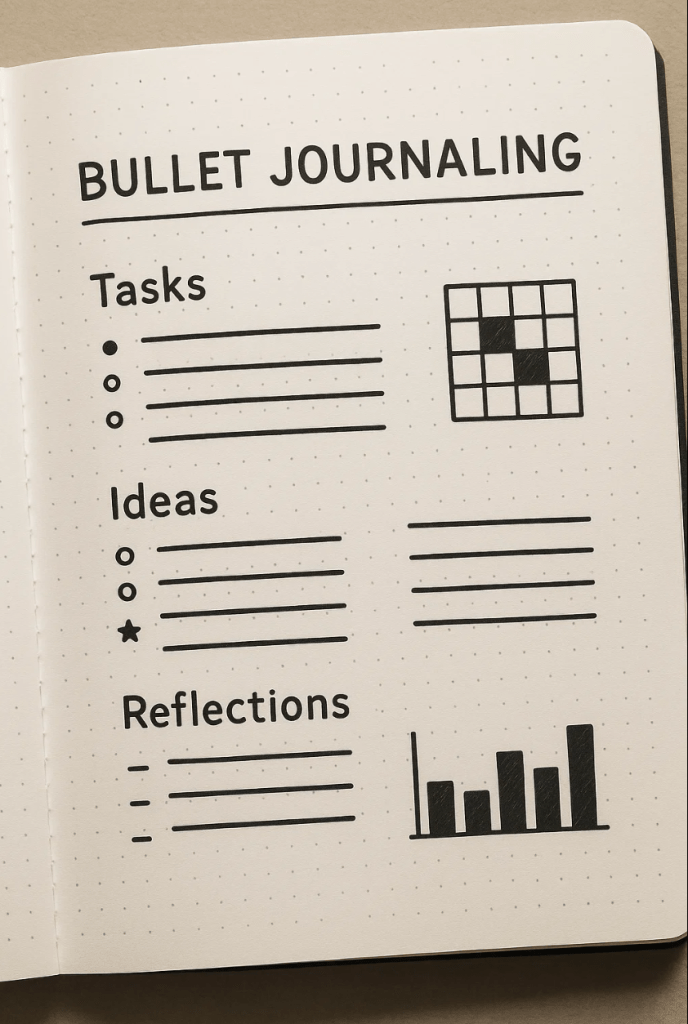
1. Bullet Journaling
A minimalist system using quick, structured bullets for tasks, ideas, goals, and reflections. It’s great if you love clarity, lists, and visual tracking. However, I found it a bit too rigid for deeper thoughts.
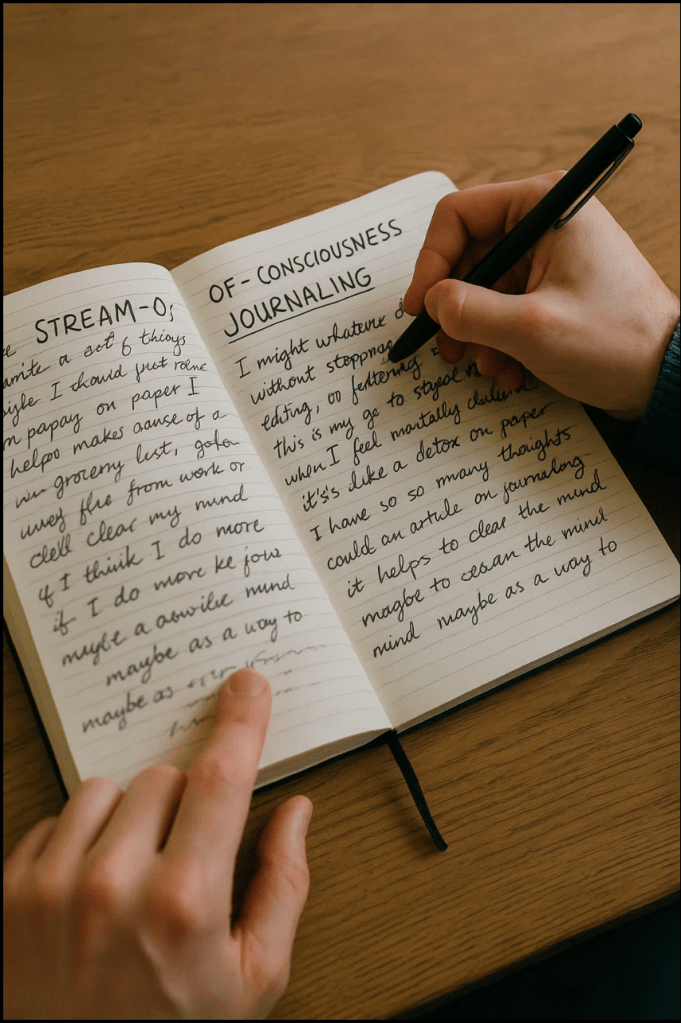
2. Stream-of-Consciousness Journaling
You write whatever comes to mind, without stopping, editing, or filtering. This is my go to style when I feel mentally cluttered—it’s like a brain detox on paper.
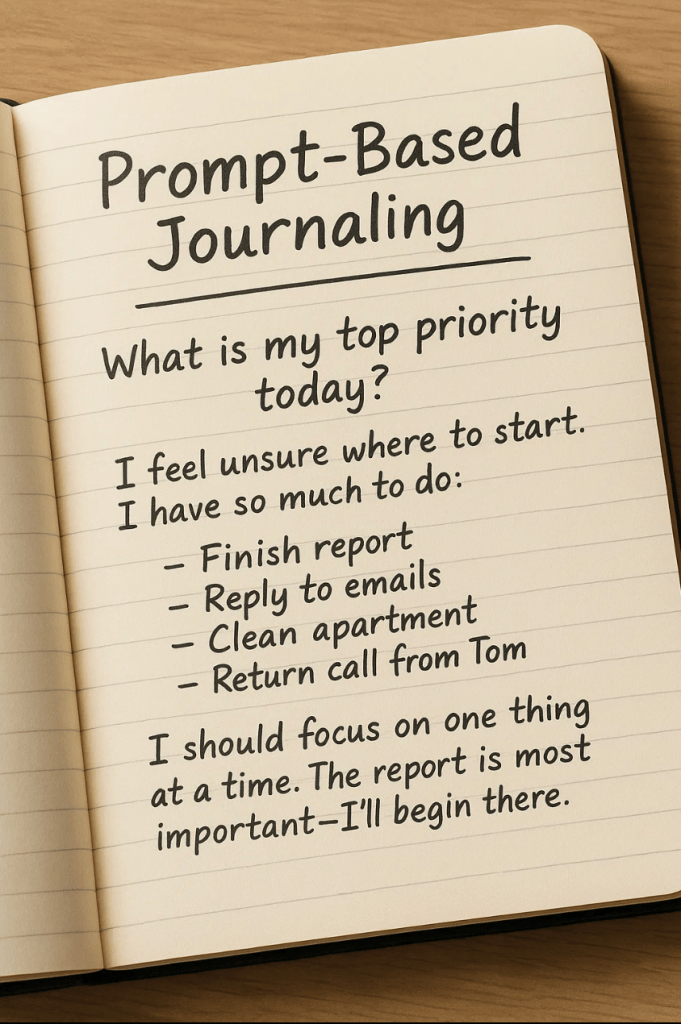
3. Prompt-Based Journaling
You start with a simple question or statement (e.g., “What do I need today?”) to guide your thoughts. On days I feel scattered, this is the method that helps me get unstuck—no overthinking, just direction.
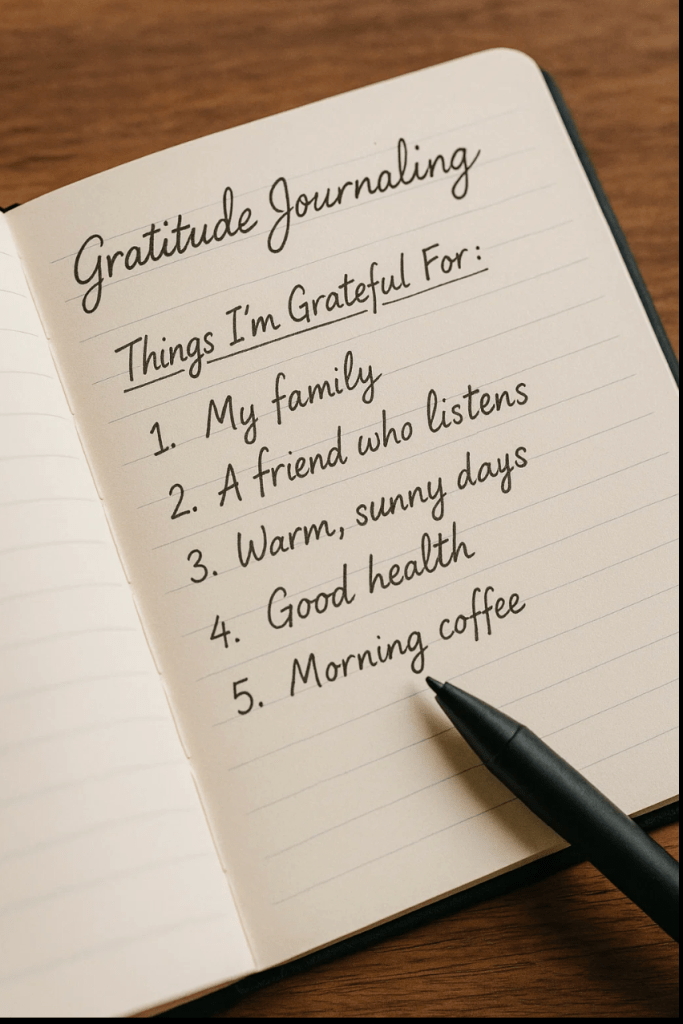
4. Gratitude Journaling
You jot down 3–5 things you’re grateful for daily. It’s quick, grounding, and builds a positive mindset over time. I often add this to whatever style I’m using—it lifts my mood almost instantly.
✍️ From Stuck to Flowing: Fixing Common Journaling Blocks (with Easy Practice Tips)
Even with the best intentions, most people stop journaling after a few days. They do not stop because it doesn’t work. They stop because they get stuck. Here’s how to get past the most common blocks:
1. “I Don’t Know What to Write”
Why it happens: Your mind is busy, but unfocused.
Quick Fix: Start with a simple prompt like “What’s one thing on my mind right now?” or “How do I feel today, honestly?”
Pro Tip: Write your same favorite prompt daily for a week. Repetition builds rhythm.
2. “I Don’t Have Time”
Why it happens: You imagine journaling takes 30 minutes.
Quick Fix: Set a 5-minute timer. Write one sentence if that’s all you have.
Pro Tip: Keep your notebook visible (desk, bag, bedside)—visibility = consistency.
3. “I Feel Silly or Self-Conscious”
Why it happens: You’re worried about writing “wrong” or overthinking it.
Quick Fix: Remind yourself: no one will read this. It’s not performance—it’s release.
Pro Tip: Start your entry with “This doesn’t have to make sense…” and go from there.
4. “I Can’t Stay Consistent”
Why it happens: You made journaling too big or too vague.
Quick Fix: Attach it to something small—after coffee, before checking your phone, post-shower.
Pro Tip: Choose a style like gratitude or one-prompt journaling. Stick with it for 7 days. Keep it boring, not perfect.
🔸 Bonus: 3 One-Line Prompts to Try Today
- “Today, I want to feel more _______.”
- “Something I’m holding onto is _______.”
- “If I could let one thought go, it would be _______.”
🧡 Conclusion: Start Small, Stay Honest
Journaling isn’t about filling pages. It’s about showing up for yourself—consistently, gently—even if all you write is one honest sentence.
The real power of analog journaling doesn’t come from perfect handwriting or deep insights every day. It comes from creating a quiet space that’s just for you. A space where thoughts don’t have to be polished, and nothing needs to be shared or optimized.
Over time, those little daily check-ins start to add up. You’ll notice patterns. You’ll gain clarity. You’ll feel lighter. Not overnight—but slowly, steadily, like clarity growing in the background.
🌱 Final Tip: Don’t aim for more. Aim for real.
Open the notebook. Write what you feel. Close it. That’s it. You’ve won the day.
If you found this helpful, stay tuned for the next part of this series. I’ll share my favorite analog tools, layouts, and rituals. These will help you personalize your journaling journey even more.
Until then, keep it simple. Keep it yours. And most importantly—keep going. ✍️✨
About Mastrification
This space is dedicated to learning frameworks, personal growth, self-improvement, and productivity. I believe in lifelong learning and constantly seek wisdom from great minds, timeless books, and successful organizations.
Here, I share practical strategies, book insights, and proven frameworks. These are simple yet powerful ideas to help you grow, improve, and achieve your goals. My goal is to make learning actionable and accessible. Whether it’s mastering a new habit or enhancing your focus, I aim to achieve this. You can also learn from a great book to aid in this goal.
I also explore how to use AI in daily life and work. The goal is smarter, faster, and better results.
I’m also the creator of the YouTube channel TechVedas. It focuses more on technology and engineering. It reflects my long-standing commitment to sharing knowledge. I am committed to staying active in the digital space.
Let’s grow, adapt, and evolve—one step at a time!”
Certifications Validates, Mastery Defines..
🤝 Let’s Stay Connected!
If you found this post helpful, I’d love to hear from you! Subscribe to my newsletter for more practical insights, tools, and growth frameworks—straight to your inbox.
🌟 Rate this article in the comments using this framework:
- Clarity/Language – How clear and easy to understand is the content?
- Structure – Is the content well-organized and logically flowing?
- Usefulness – Does it provide practical value or actionable takeaways?
- Engagement – Is the blog interesting and attention-holding throughout?
💬 Have feedback, suggestions, or a topic you want me to cover? Drop a comment—I read every one!






 Mastrification
Leave a comment